Bale Opener: Rieter A11 About
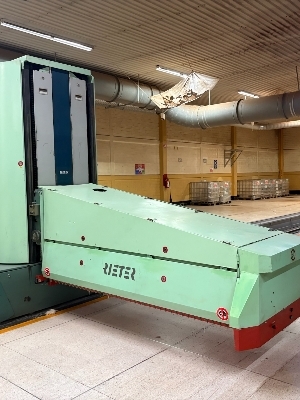
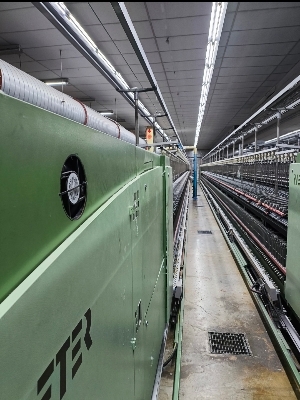
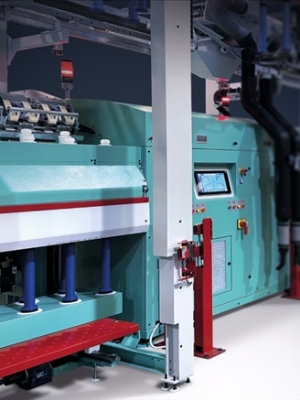
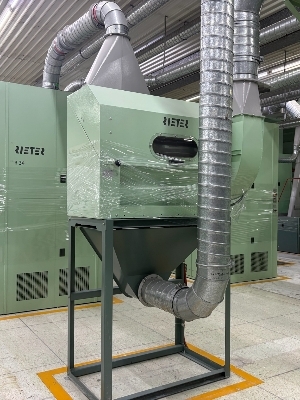
1. Professional Technical Listing Ideal for machinery trading websites or official quotations. High-Performance Automatic Bale Opener: Rieter A11 (2011) This Rieter A11 UNIFLOC offers a powerful and efficient start to your blowroom line. Known for its uniform tuft extraction and high production rates, this machine ensures optimal cleaning and blending from the very first step. Manufacturer: Rieter (Switzerland) Model: A11 UNIFLOC Year of Manufacture: 2011 Electrical Specs: 3-Phase | 400V | 60Hz (Optimized for high-performance grids) Pneumatic Requirement: 6 Bar Condition: Excellent maintained condition; ready for immediate integration. Feature Specification Brand Rieter Model A11 UNIFLOC Vintage 2011 Extraction Type Micro-tuft for superior blending Power 400V / 60Hz / 3-Phase Air Supply 6 Bar Serial Identity 40012822-00058
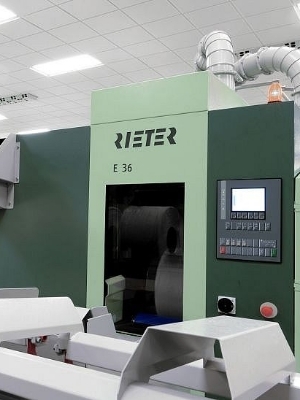
Advanced Programmable Feeding SystemThe Rieter A11 stands out with its continuous, programmable feeding mechanism, streamlining bale opening while maximizing throughput. With the capacity to handle up to 60 bales using extensions, it's tailored for scalable textile operations requiring seamless blending of new cotton and synthetic fibres. The touchscreen controls simplify adjustments and monitoring, boosting productivity and reducing manual intervention.
Integrated Safety and Dust ControlFeaturing emergency stop buttons, overload protection, and safety interlocks, the A11 puts operator safety at the forefront. Its integrated suction ports effectively manage airborne dust, ensuring a cleaner and safer working environment. These features help maintain compliance with occupational safety regulations and prolong machine life by minimizing internal contamination.
Flexible Operation for Modern MillsWith adjustable roller speeds, multiple blending options, and robust steel construction, this machine adapts easily to varying production demands. The air-cooled system ensures reliable operation even in warm climates, making it ideal for mills across India. Its electronic controls and HMI interface facilitate quick setups, recipe changes, and system monitoring, achieving consistent fibre opening and blending quality.
FAQ's of Bale Opener: Rieter A11:
Q: How does the Rieter A11 Bale Opener improve fibre handling and production efficiency?
A: The A11 automates the process of opening and blending bales, reducing manual labour and ensuring uniform fibre preparation. Its high capacity and programmable settings enhance consistency and throughput, making it suitable for modern high-volume textile production.
Q: What safety features are integrated into the Rieter A11 Bale Opener?
A: The machine is equipped with emergency stop buttons, overload protection, and safety interlocks to safeguard operators and prevent accidental damage, ensuring that all operations remain within safe parameters.
Q: When is the Rieter A11 Bale Opener typically used in the textile production process?
A: This equipment is used at the beginning of the blowroom or open-end spinning process, where it prepares and blends fibres from multiple bales for further processing.
Q: Where can the Rieter A11 Bale Opener be deployed effectively?
A: It is ideal for spinning mills and textile plants across India involved in processing cotton or synthetic fibres, particularly where automation and production flexibility are essential.
Q: What is the process for adjusting opening roller speed and feeding settings?
A: Adjustments are made through the machine's 7-inch touchscreen HMI, allowing operators to set roller speed up to 1,200 rpm or change feeding and blending parameters according to production needs.
Q: How does integrated dust extraction benefit mill operations?
A: The built-in suction ports reduce airborne cotton or fibre dust, which helps protect operator health, improves air quality in the facility, and supports smoother machine operation.
Q: What are the benefits of choosing the Rieter A11 for my facility?
A: You benefit from automated, programmable bale opening and blending, reduced noise levels, enhanced safety, and a high production rate that streamlines the first stage of textile manufacturing.





 Get Latest Price

 Send Inquiry
 Send Inquiry
 Send SMS
 Call Me Free